Posts Tagged ‘8 Roles’

The Actor Is What We See, But Only 1/8 Of What Is There

Wednesday, March 7th, 2012

An earlier version of this post was published in March, 2010.

When I work with individuals or groups on ways Theatrical Intelligence can make a difference in their lives, my goal is to stimulate an exploration into their creative core.

The term Theatrical Intelligence evokes responses that range from: ”Yes! It’ll help me when I have to give a presentation” to “Not my kind of thing – don’t like being in the spotlight.” There is an assumption that Theatrical Intelligence = Actor.

What we see
What We See

In the theatrical production model, the Actor is what we see, but only 1/8 of what is there. He or she wouldn’t be up on the stage if it weren’t for the Writer, Producer, Director, Designer, Manager, Technician and Critic. The talent and skill contained in each of these roles is interdependent, and without them, the Actor wouldn’t be seen at all!

What's Really There

What’s Really There

Creative collaboration requires that each person within a group takes on his/her most comfortable role, and everyone contributes to the creative potential of the collective. It is built on the premise that all collaborators’ talents and skills complement one another. In other words if I don’t have a particular strength, one of my cohorts will.

Recently I worked with a young woman who told me “I don’t have one creative bone in my body. It’s just the way I’ve always been and I’m fine with it.” She was politely annoyed that I didn’t accept her “non-creativity”. What became abundantly clear during a quick writing exercise, is that she was a born technician: the only one who could get the electronic hook-up to work; and a gifted manager: organizing a group photo while keeping large egos in the room satisfied, and everyone grateful.

When I pointed out her strengths in those roles, she explained “That’s the easy stuff!” and gave us our biggest laugh of the day. Then nearly everyone admitted their techno-ignorance, impatience with managing differing personalities, and that the combination of her geeky-gift and people-management-savvy was something they longed for in their employees.

The talented young Technician/Manager took all this in, and with just the hint of a grin, said: “Well, maybe I have a couple of creative bones…” My response? Damn right.

Understanding her Theatrical Intelligence that day, she fully experienced the fun part of being smart. It was easy, it was fun, and the smartness was all her own.

The Ensemble Studio Theatre: A Love Story

Thursday, September 8th, 2011

I’d like to introduce you to the Ensemble Studio Theatre (EST): we’ve been in love for 33 years, and hundreds of other theatre professionals participate in our love circle. Including my husband.

FULL DISCLOSURE: I’ve been a member of EST since 1978 and was elected to its Board in 2010.

Roger Morgan, my husband and business partner, is a founding member. He signed the articles of incorporation in 1968, alongside the late-great Curt Dempster, EST’s Founder.

So what’s to love, you may ask?

EST is a safe haven to several hundred theatre professionals: actors, writers, producers, directors, designers, managers, technicians and critics. They apply for membership, which is free, and they represent the 8 roles in Theatrical Intelligence.

Members = the ENSEMBLE in the theatre’s name.


The STUDIO = a “theatre gym”, where members gather for vigorous workouts and candid de-briefs from fellow members and the artistic staff.

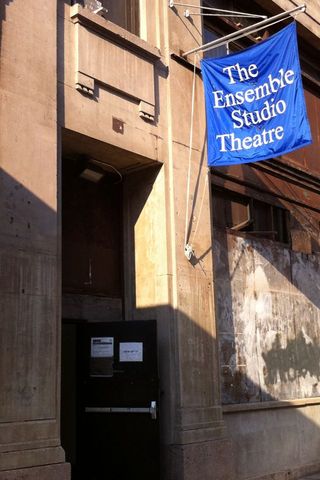
THEATRE = Place: 549 West 52nd Street, which in spite of its grit and an occasional mouse, is passionately loved by its users.

These three elements make up THE ENSEMBLE STUDIO THEATRE: a lifeline to creativity throughout the best (as well as the worst) years in the lives of its members.

Since its inception, EST has developed an astonishing 6,000+ plays. Just as important, it continues to nurture its artists and the collaborative technique that created them.

With an annual budget of under $2 million, it has been recognized by the American Theater Wing, the NY Outer Critics Circle, Drama Desk Awards and Village Voice Obies; collectively, its members have won Pulitzers, Oscars, Tonys, Golden Globes… the list goes on.

So why does this trashy little place with golden credentials matter so much to its members?

To use myself as an example, I dared to write, direct, produce, and spread my wings as an artist at EST. I had never stepped into any of these roles before.

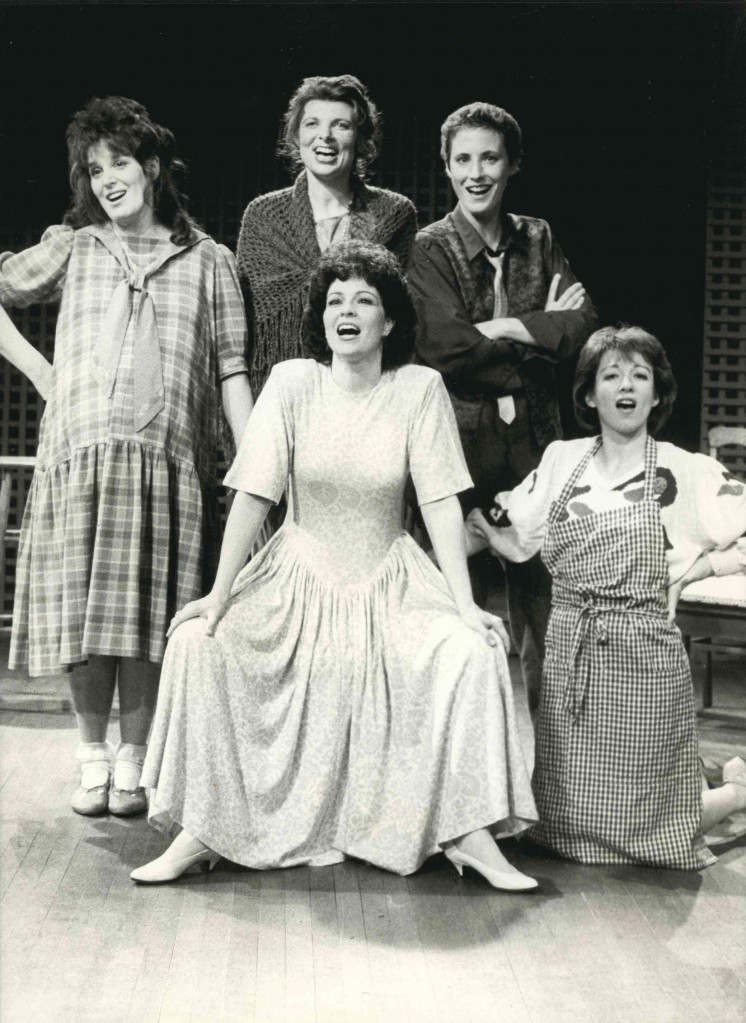
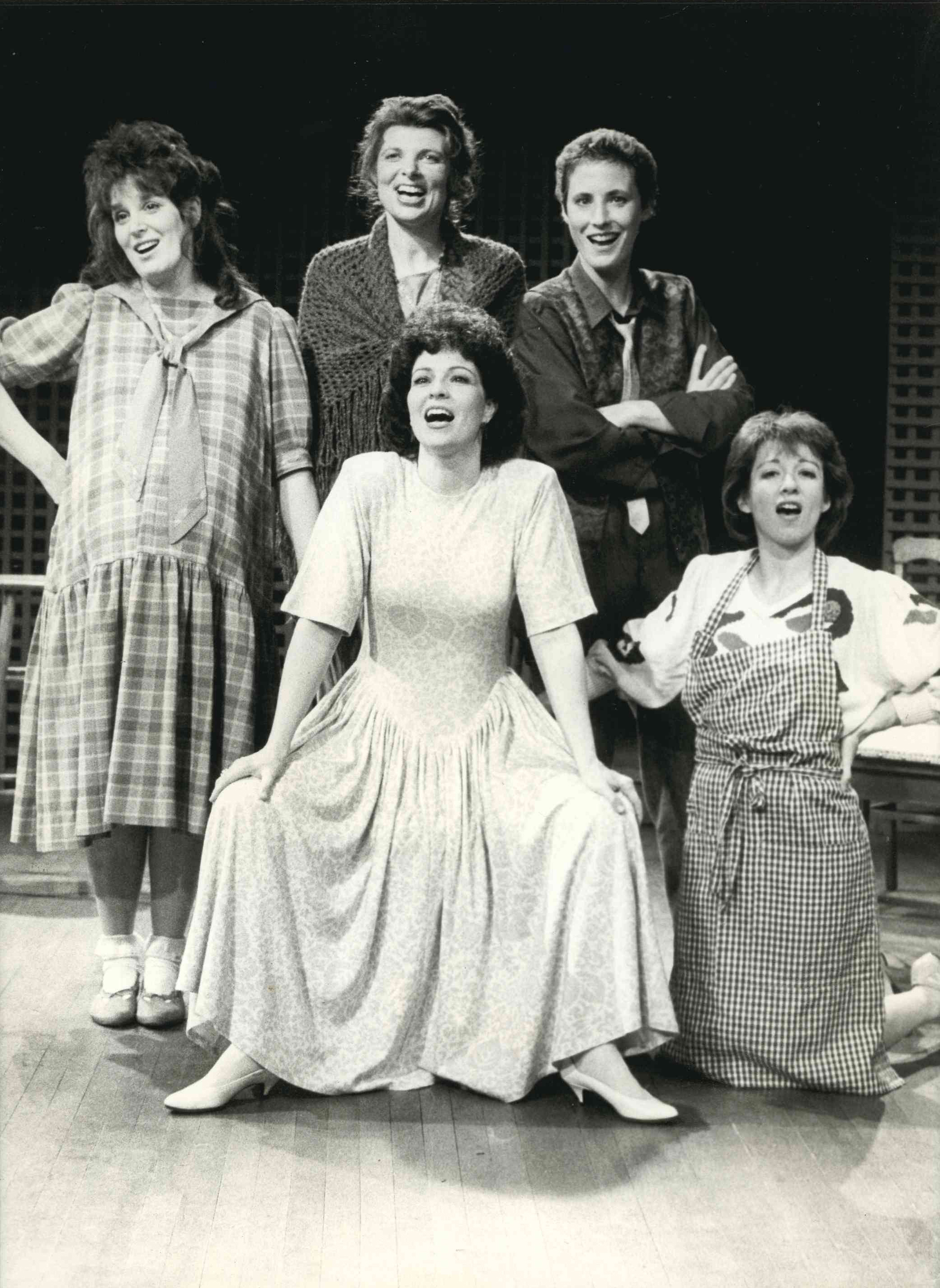
In 1987, EST actress Christine Farrell asked if I’d join a group of leading ladies in an evening of our own making. She knew that we’d never be cast in the same play, and she simply wanted to be onstage together for a change, instead of competing for the same roles. EST member Pamela Berlin joined us as DIrector.

We wrote, workshopped, disagreed, re-wrote, disagreed better, re-wrote better, learned to trust, performed, published and produced MAMA DRAMA, a collaborative piece that is still performed in academic and community theatres nationwide.

My development as a leader is directly attributable to EST. By the late-80’s I was sick of performing, but I wasn’t trained to do anything else. I wanted to work ON a play instead of IN it. Because EST members are able to initiate their own projects, I did. I wrote. Directed. Managed. Experimented. Convinced people to work with me for free.

It became clear to me that I could bring a project to life by identifying strengths in my collaborators that they didn’t necessarily know they had. The trick was to reflect them back so they were somehow quantifiable.  Each time this happened, a profound level of trust was established in the group and we often believed that together we could do anything! (This was frequently followed by a spectacular and unforgettable failure.)

Immediately after the experience of writing, directing and producing, I shifted my career, a direct result of exploring these roles. Writing is now one of my great passions and part of my daily life, and it would never have happened without EST. It’s where I discovered my “CEO shoes”, and they fit so comfortably I never wanted to take them off.

Curt, Christine, Leslie, Rita, Annie, Donna, Marianna and Pam changed my life.

There are many EST stories just like mine. Why? Because this theatre was – and is – the place to try new stuff and know that it’s OK to fail. In fact, absence of failure is a bit suspect, and falling flat on your face is certainly the quickest way to learn: check out the 6 Principles of Theatrical Intelligence.

And at EST, once a member always a member, so we get to fail again and again!

These days I’m back at EST experimenting in yet another role: Vice Chair of the Board of Directors. I believe it’s essential to spread the word about this model of creativity based on trust, the foundation upon which great work is built. That’s my goal.

It’s easy, because EST is not only a theatre that is deeply loved – it is a theatre that knows how to love back.


Photo above left: The Ensemble Studio Theatre by Christopher Cayaba

Photo above right: MAMA DRAMA, clockwise from left: Leslie Ayvazian, Christine Farrell, Rita Nachtmann, Anne O’Sullivan, Ann Sachs (seated, center). Not pictured: Director Pamela Berlin, Donna Daley and Marianna Houston.

If you’d like to see what’s going on at EST: please join us!

Theatrical Intelligence Workshop: NYC

Sunday, November 14th, 2010

There is more to what you do than meets the eye.

And it cannot be seen through a regular lens...

Learn to look through another lens: use Theatrical Intelligence.

What is Theatrical Intelligence? It’s a process that uses theatre concepts to impact work performance. In this workshop you’ll identify the role(s) you were born to play by tapping into one or more of its 8 roles as your own creative strength.

Join us in a supportive, collaborative environment, and discover “the fun part of being smart!”


The ACADEMi of LIFE

presents

A Theatrical Intelligence Workshop

THE MUSE HOTEL

130 West 46th (6th & 7th)

$195. (lunch included)

REGISTER HERE (Click CLASSES)


WORKSHOP LEADER:

ANN SACHS: President and CEO of Sachs Morgan Studio, former leading actress on Broadway; award winning entrepreneur and founder of Theatrical Intelligence.

“There is no joy in living without joy in work.” Thomas Aquinas


Rocco at TCG: Back From Peoria

Monday, November 9th, 2009

Rocco Landesman

Rocco Landesman

Rocco Landesman had just gotten off the plane from Peoria on Saturday when he arrived at the Theatre Communications Group Fall Forum. We were a group of about 120 TCG theatre members and board chairs, gathered at the Desmond Tutu Center in Chelsea. (Full disclosure: I am neither a theatre member nor a board chair; I had received special permission to attend.*) Everyone in the room was honored that Rocco had carved out the time to meet with us so early in his tenure at NEA, and we were eager to hear what he had to say.

I don’t know Rocco well, although he was our Studio landlord for a few years. As he walked in I didn’t so much assault him as take the opportunity to congratulate him on his provocative entrance into his new role, and to express my hope that he wasn’t discouraged by his critics. His response: “Ann, I’m 62. I’m not about to change now.” I don’t know why I expected anything different, but it was so reassuring to hear those words I almost threw my arms around him and kissed him on the lips. I tend to be a little over-the-top in situations like this, so decided against it.

Rocco opened his talk by telling us about a “gruesome meeting on the Hill” recently, after which he told his wife Debby it reminded him of a favorite old country song: Joe South’s These Are Not My People. Then he told us that he was relieved to be here, because “…you ARE my people!” Vigorous applause. It  felt good to be included.

He drew a parallel between the theatre as “the most aspirational of activities” and the Obama administration as driven by aspiration. In his no-nonsense-get-to-the-bottom-line style, he respectfully referred to our President as an artist “…who has faced the blank page” and succeeded in that perilous journey. And he spoke passionately about the theatre as “…the most essential, the most basic and primal of all human activities; the activity that appeals to our deepest needs and impulses.” It was stirring. “I mean it’s gossip - we’re overhearing people talk when we go to a play!” Impeccable timing.

He went on to explain that if we hadn’t heard about “Art Works” yet, we would soon, with its triplicate meaning :

1. Art works on the wall, as in “a piece of art”.

2. Art works to transform lives, as in his case, he was changed forever when he saw Long Days Journey…

3. Art IS work!  As in: there are 5.7 million arts related jobs in our country.

Rocco spoke from his heart, and didn’t refer much to his scribbled notes on a yellow pad. He admitted that the Chairmanship is still so new to him he hasn’t figured out how it works. He is comfortable in his discomfort, however, and is not afraid to fail. It is one of the reasons I’m so excited about his arrival in Washington; he is living proof of the Theatrical Intelligence principle: failure is the quickest way to learn.

He was a good sport and answered a few questions we had submitted earlier in the day. His lack of endorsement for ‘No Child Left Behind’ was palpable: “It leaves too many children behind who could be saved by arts programs.” He spoke of a charter school in New Orleans which gave him a glimpse into an inspired program, as he watched young children start the day singing Fats Domino songs.

And he answered my question (don’t even ask how thrilled I was) which was “By what measure will you define your success at NEA?” His answer was to tell of the crusty old New Englander who was asked his advice about what makes a happy life. His answer: faster horses, younger women, better whiskey, and more money.

Rocco: I’ll let the first three go, but without a doubt the way I’ll be judged is by how much money I can bring into the NEA. What can I say? I am optimistic. And with apologies to Mel Brooks – perhaps my optimism is delusional -  I can’t help it, I’m a broadway producer.

Applause. Standing ovation. Exit.

My opinion? Perfect casting.

*I was meeting Futurist Jack Uldrich, a Twitter pal, who had presented a stimulating talk on “unlearning” earlier in the day.


Welcome!

Monday, May 11th, 2009

Are you wondering what Theatrical Intelligence is? Simply put, it is a process I have developed based on the theatrical production model, to bring joy and creativity into the workplace. It’s the fun part of being smart!

It came about as a result of my personal career shift from working IN the theatre to working ON the theatre, which (for me) meant working in a more businesslike environment.  My first three blogposts form a trilogy describing the way my professional experience gradually grew into this new venture.

Theatrical Intelligence has six principles and eight roles (listed below).

Peak performance - an "A" in lights

"A" for Peak Performance

THE SIX PRINCIPLES

1. Everyone shares the same goal
2. Everyone shares an equivalent risk
3. Collaboration rules
4. The work matters
5. Failure is your friend, and the fastest way to learn
6. Success comes with the courage of stepping into the unknown

THE EIGHT ROLES

1. Writer
2. Actor
3. Director
4. Producer
5. Designer
6. Manager
7. Technician
8. Critic

I will be blogging about this concept prior to the eventual publication of my book, which will provide interviews and demonstrations of Theatrical Intelligence at work.

You are invited to join the Theatrical Intelligence conversation – I look forward to your input.

Cheers!